- Saving Sundays
- Posts
- (Don’t ) Trust me on this one
(Don’t ) Trust me on this one
How do you teach trust when even you're not sure what's real?

Jonathan Ryan Vassallo
April 05, 2026
Hey Actual Intelligence (AI)
Happy Sunday. You ready to rock the week? Here’s how:
The story
Last week, I wrote about the 5 waves of trust which sparked many responses and conversations with other dads:
How do you teach your kids to trust in a world where even you’re not sure what’s real anymore?
I want my kids to be trusting. I believe it leads to a happier, easier life.
But that’s getting harder.
When I was a kid, a photo or video was proof. It ended debates.
“Pics or it didn’t happen.”

The only time you questioned reality was whether something strange in the background was light, dust… or a ghost.
Now?
AI has flooded the world with fake images and videos that look completely real.
And the bigger problem might not be believing fake things, but doubting real ones.
I missed the Olympic hockey game between Czechia and Canada, but I saw a photo on Reddit with six players on the ice during the goal.
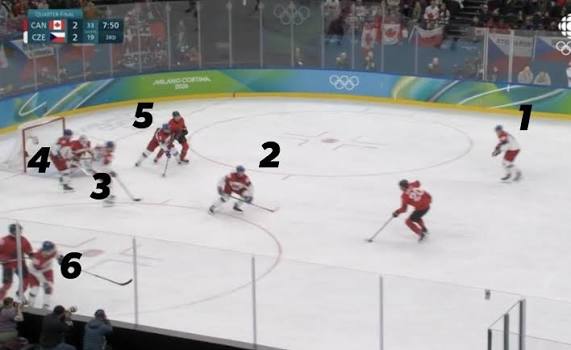
I immediately thought that it was fake.
That some upset Canadian hockey fans posted it as rage bait. There is no way the refs and everyone else on the ice would have missed this.
It turns out it was real (and it was actually 8 players).
My oldest son loves sports. Always has.
Since he could walk, he’s had a ball, a stick or a bat in his hands.
And ever since he was a kid, I tried to teach him to play fair, follow the rules and be honest. I believe the rules he plays by at home are the same he'll take with him everywhere.
When kids are playing outside, there are no referees. There’s just them, and every kid goes through the same phase of pushing boundaries, wanting to win, testing the line.
In sports and on the playground, trust is regularly tested, even at the highest levels.
This year, Major League Baseball introduced the ABS challenge system — basically, robot umps that players can appeal to when they think the human ump got it wrong.
And so far this year, out of 352 challenges, 195 calls were overturned.
That means over half the time, the umpire — the authority we're supposed to trust — was wrong.
So how do you prepare your kids for a world like this?
I’ve stopped trying to teach him how to figure out what’s true and what isn’t.
I’m still figuring that out myself.
Instead, I focus on something simpler: Integrity
The best definition of integrity I’ve heard is that your actions match your words. It’s not just about honesty with others; more importantly, it's about honesty with yourself.
What is integrity?
Integrity is the internal sense of being a morally coherent person—the bedrock of self-trust where internal values and external actions align. It goes beyond simple honesty to include "practicing what you preach" and taking full responsibility for your choices. By choosing to do what is right even when no one is watching, you remain whole rather than fragmented, avoiding the internal friction that occurs when behaviour betrays your personal compass. |
|
A few weeks ago, I caught my son sneaking Halloween candy from the cupboard (yes, we still have some.)
He denied it.
I found the wrapper in his pocket, and he was forced to admit it.

I think he thought he was going to get into trouble for it, but instead, all I said was, “I am more upset that you lied to me than taking the candy. You can keep the candy, but I'd rather you keep your integrity next time, too.”
That began a chat about integrity and its importance.
A few days later, we were in the basement playing mini sticks.
I took a shot that hit the crossbar and came down behind him. I couldn’t see if it crossed the line because he was in front of the net. We’ve been here before.
No reply. No VAR. No ref. Just him.
“Did that go in?” I asked, expecting him to deny it like he has in the past.
He looked at me, paused, and said:
“Yeah, Dad. It did. Nice goal.”
We both scored on that one.

The pebble

Courtsey of Nathan Pyle: https://www.instagram.com/nathanwpyle/
The challenge
The mantra: “Rupture is a chance to repair.”
Admit something. It’s best if you right a wrong with another person, but even if you just admit it to yourself. Do it now. Even if it carries shame, you’ll feel much lighter the moment you do it.
P.S. Last week, I referenced The Speed of Trust by Stephen M.R. Covey. One line that's stuck with me: "We judge ourselves by our intentions and others by their behaviour." That's the whole parenting thing in a sentence.
Until next week,
Saving Sundays
P.S. Send this to a friend. You can make them happier; they’ll subscribe and make us happier. Spreading happiness is easier than you think!